Tackling Communication Challenges in Employee Benefits Administration

Effective communication strategies are vital in today’s diverse, fast-paced workplace, especially regarding employee benefits. However, many organizations still struggle with communication issues that prevent employees from understanding, engaging with, and making informed decisions about their benefits. 

Let’s explore the most common workplace communication issues that hinder benefits education and how Benefits Reimagined addresses them head-on. 

Common Communication Challenges in Benefits Administration 

Organizations often face various challenges when trying to engage employees about their benefits. These issues include language barriers, information overload, and a lack of personalized communication. 

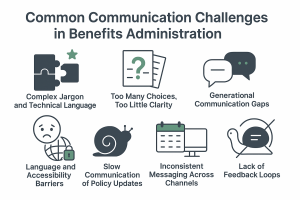
Here are some of the most pressing communication barriers at work: 

  • Complex Jargon and Technical Language: Benefits documents are often filled with HR and insurance terms that can confuse employees. 
  • Too Many Choices, Too Little Clarity: An abundance of benefit plans and policy updates can overwhelm even the most engaged employee. 
  • Lack of Personal Relevance: When benefits communication doesn’t feel tailored to an employee’s life stage, needs, or job type, it often gets ignored. 
  • Generational Communication Gaps: Different generations prefer different workplace communication tools—from mobile apps and Slack to printed guides and in-person sessions. 
  • Language and Accessibility Barriers: Multilingual and differently-abled workforces require more inclusive approaches to ensure all employees receive equitable access to benefits information. 
  • Inconsistent Messaging Across Channels: When information is disseminated across multiple channels, such as emails, intranets, and HR systems, without alignment, it leads to confusion. 
  • Slow Communication of Policy Updates: Delays in communicating open enrollment dates, compliance deadlines, or benefit changes can cause missed opportunities. 
  • Lack of Feedback Loops: Without a channel to ask questions or offer input, employees feel disconnected from the process. 
Addressing Communication Challenges with Benefits Reimagined 

At Benefits Reimagined, we take a proactive approach to solving workplace communication challenges by combining design, technology, and strategy. 

  1. Visual Simplicity Meets Strategic Clarity

We use easy-to-understand visuals, simplified terminology, and real-world examples to demystify benefit concepts. Instead of dense PDFs or legalistic language, we provide bite-sized, visually engaging content tailored to every learning style. 

  • Visual infographics for plan comparisons 
  • Step-by-step animations for enrollment guides 
  • Mobile-responsive layouts for accessibility 
  1. Personalized Communication Through Smart Integration

By integrating with SAP SuccessFactors, our communication engine automatically tailors benefit content based on employee role, location, age, or plan eligibility, solving for communication issues caused by generic or irrelevant messaging. 

  • Targeted messages for new hires, parents, or retirees 
  • Custom alerts for enrollment deadlines or benefit changes 
  • Personalized summaries of what’s new or what’s changed 
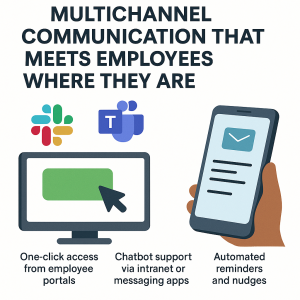
  1. Multichannel Communication That Meets Employees Where They Are

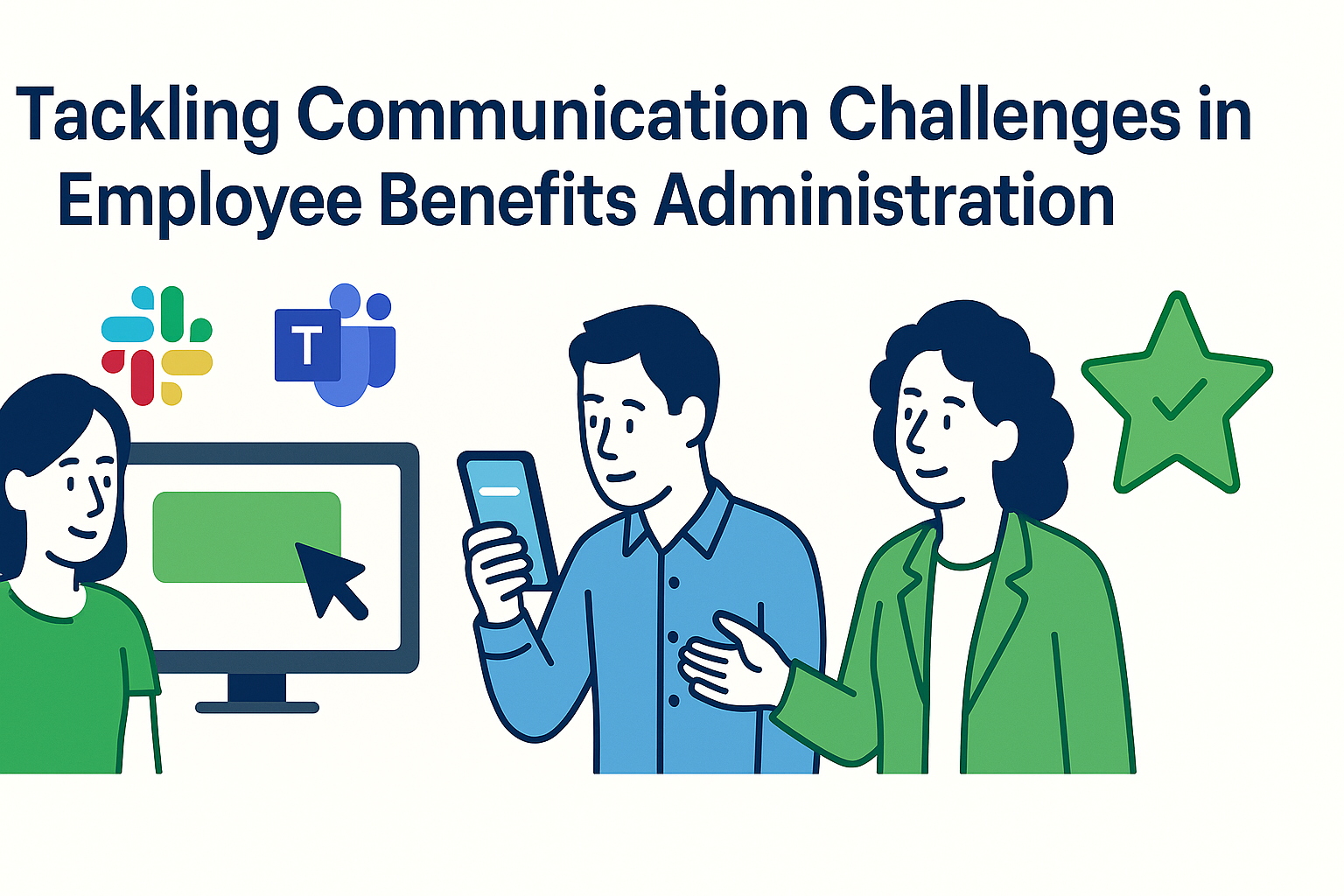
From Slack and Teams to mobile notifications and email, Benefits Reimagined supports omnichannel delivery. Whether your team is remote, hybrid, or deskless, we help you implement workplace communication tools that align with how your people work. 

  • One-click access from employee portals 
  • Chatbot support via intranet or messaging apps 
  • Automated reminders and nudges 

Feedback-Driven Communication Skill Development 

We don’t just send information—we listen. Regular feedback loops help us continuously improve how benefits are communicated. We encourage organizations to: 

  • Run quarterly surveys on communication clarity and impact 
  • Host feedback sessions after open enrollment periods 
  • Analyze language comprehension and format preferences 

This data helps fine-tune your communication skill development strategies across HR, leadership, and frontline staff. 

Real-Time Communication via AI-Powered Chatbot 

Benefits Reimagined includes an integrated Communication HUB that leverages AI to respond to real-time queries. Our chatbot serves as a 24/7 benefits guide, providing instant answers, decision support, and enrollment assistance. 

Key features include: 

  • AI-powered responses to FAQs 
  • Personalized benefit recommendations 
  • Seamless integration with SuccessFactors for employee-specific insights 
  • Access across desktop, mobile, and messaging platforms 
  • Continuous updates based on new policies or offerings 

This intelligent, responsive tool eliminates many communication barriers at work by making the benefits of education conversational, contextual, and always accessible. 
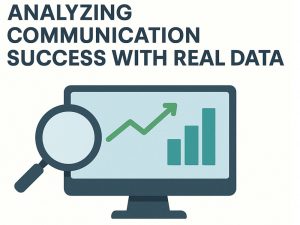
Analyzing Communication Success with Real Data 

We go beyond just communicating—we measure impact. Our built-in analytics allow employers to track: 

  • Open and engagement rates on messages 
  • Participation in benefit programs post-communication 
  • Channels with the highest reach and response 
  • Gaps in understanding based on plan type, department, or tenure 

These insights enable HR teams to adjust their strategies in real-time, reducing miscommunication and enhancing overall satisfaction. 

The Bottom Line 

Communication challenges in benefits administration can have a direct impact on employee engagement, satisfaction, and even retention. By addressing these internal communication problems with thoughtful design, personalized messaging, and modern tools, organizations can foster clarity, trust, and participation. 

Benefits Reimagined empowers HR teams with an end-to-end solution for effective communication strategies that resonate with today’s workforce, no matter their role, location, or learning style. 
Why Flexibility, Configurability & Extensibility matter for Benefits Administration?

Configuration vs. Customization

Software configuration involves changing a system’s settings and parameters without modifying its source code. It relies on specialized expertise to perform the necessary configurations and can be done through administrative interfaces or configuration files. Configuration allows users to tailor the software to meet specific requirements or adapt it to different environments. It doesn’t require programming skills.

On the other hand, software customization refers to modifying the source code of a software system to add or alter its functionality. Customization often requires programming expertise and involves writing code to implement desired changes. It allows for more extensive modifications and the creation of unique features not available out of the box.

Configuration leverages the software’s existing capabilities and enables easy application of upgrades and updates without conflicts or compatibility issues. It is a more straightforward and less complex approach.

Customization provides greater flexibility and the ability to create tailored solutions, but it comes with drawbacks. It involves increased complexity, higher maintenance costs, and potential compatibility issues when upgrading or integrating with other systems.

Extension Strategy for Benefits Reimagined

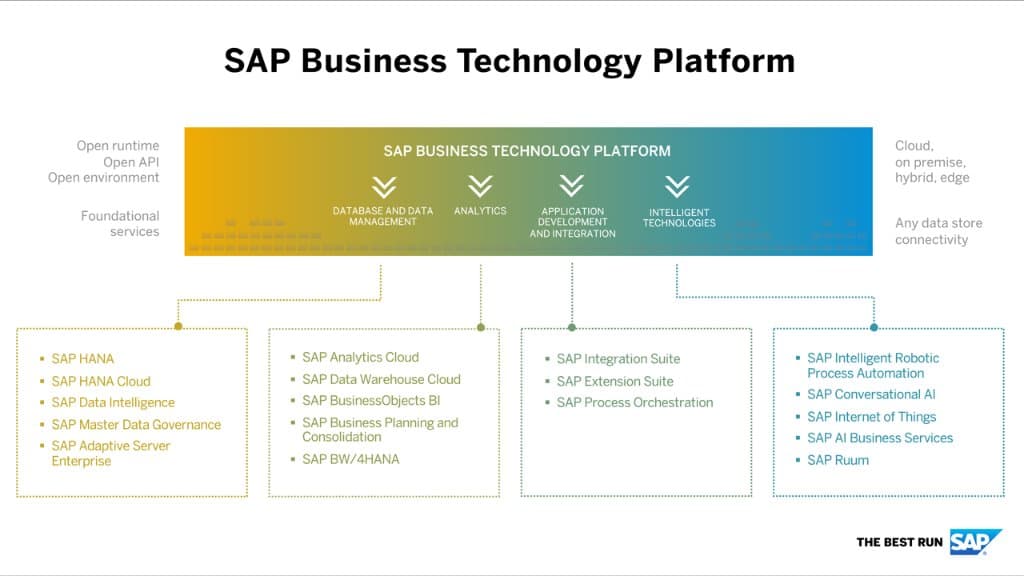
Benefits Reimagined conducted surveys and interviews and gathered user feedback to identify areas for improvement. They leverage the SAP Business Technology Platform (BTP) to develop and deploy application extensions. Each extension has clear goals and objectives aligned with the overall strategy.

Development is prioritized based on user needs and pain points, focusing on high-impact features. User and stakeholder engagement is crucial throughout the development process, with user testing and feedback gathering. Best practices from SuccessFactors and S/4 HANA extensions are followed for coding, security, and performance optimization. Seamless integration with Benefits Reimagined and other HR systems is emphasized for a better user experience.

BTP four pillars Why Flexibility, Configurability & Extensibility matter for Benefits Administration?
Intelligent Services Why Flexibility, Configurability & Extensibility matter for Benefits Administration?

Extensibility

Extensibility covers many topics enabling customers and partners to adapt standard business software to their requirements. This includes changes to software behavior that go beyond the capabilities of business configuration, data model extensions, data exposure, layout changes to user interfaces (UIs) or forms and reports, and the creation of new UIs or own applications.

The extensibility concept of Benefits Reimagined enables lifecycle-stable software products. Software updates don’t interfere with extensions from customers or partners. This is achieved with proper interface approaches (using released objects, public APIs, etc.), which means extensions in the Benefits Reimagined core don’t affect upgrades; they’re upgrade-proof. All extensions that can’t be performed directly in the core are run side-by-side on the Benefits Reimagined Business Technology Platform (BTP).

These are the most important benefits of an extension:

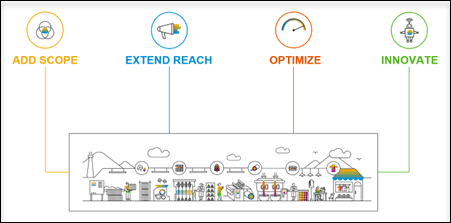
  • Gain a competitive advantage.
  • Simplify and extend your business processes.
  • Build unique and new processes that stand out from the standard software.

Extensibility in Benefits Reimagined consists of the following options.

  • Key User Extensibility through built-in capabilities.
  • Side-by-Side Extensibility through the Benefits Reimagined Business Technology Platform (BTP).

The virtual data model (VDM) forms the basis for data access in Benefits Reimagined for all extensibility options. The VDM is made up of core data services (CDS) views. CDS views expose business data, which is stored in abstract database tables, in a way that is based on business semantics and, therefore, easier to consume. For more information about the VDM and CDS views, see Virtual Data Model and CDS Views in Benefits Reimagined.

In-App Extensions

Benefits reimagined extensibility provides a comprehensive set of tools, platforms, and methodologies to serve the needs of customers and partners.

In-app means extensions are implemented within the Benefits Reimagined tenant itself.

In-app extensibility is generally used to apply minor changes and extensions to increase user productivity or implement adaptations of the application logic without changing the significant parameters of the respective business processes. These extensions add value to Benefits Reimagined applications and continue to rely on the full context of the standard implementations concerning the data, process, and UI levels. Examples are adding custom fields and tables, creating custom Core Data Services (CDS) views, and changing or adding business logic via rules, code snippets, etc.

Architectural Diagram Why Flexibility, Configurability & Extensibility matter for Benefits Administration?

You can implement in-app extensions that satisfy all extensibility qualities. End-to-end tools enable business experts to apply changes without risk, as the technical complexity is reduced to a level that corresponds to the business purpose and is stable and fault-tolerant, like standard office applications. As a result of a strict tool-based approach, these extensions are loosely coupled with core business processes and contribute to a pace-layered IT. This scenario applies to the on-premises and Cloud deployment options.

There is a range of several tools available to take advantage of in-app extensions in Benefits Reimagined.

You can use in-app tools to do the following tasks:

  • Easily define custom extensions
  • Adapt and change standard UIs
  • Replicate data to Benefits Reimagined Business Technology Platform (BTP)

The in-app tools automatically create related custom definitions for the following:

  • Data Dictionary (DDIC) fields, structures, and tables
  • Core Data Services (CDS) views
  • OData services for internal and external access
  • Benefits reimagined UIs for custom business objects
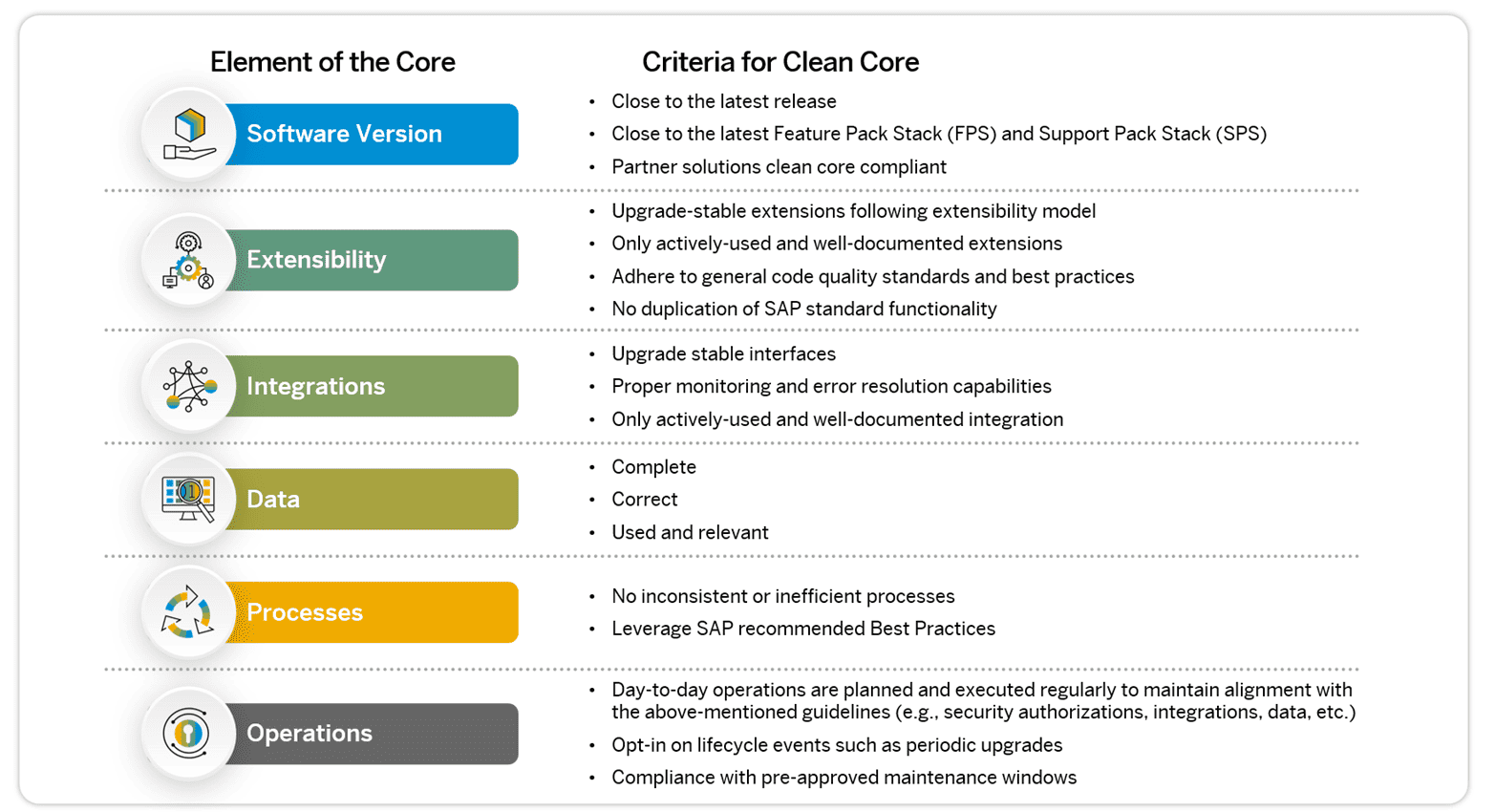
Criteria for Clean Core Why Flexibility, Configurability & Extensibility matter for Benefits Administration?

Side-by-Side Extensibility

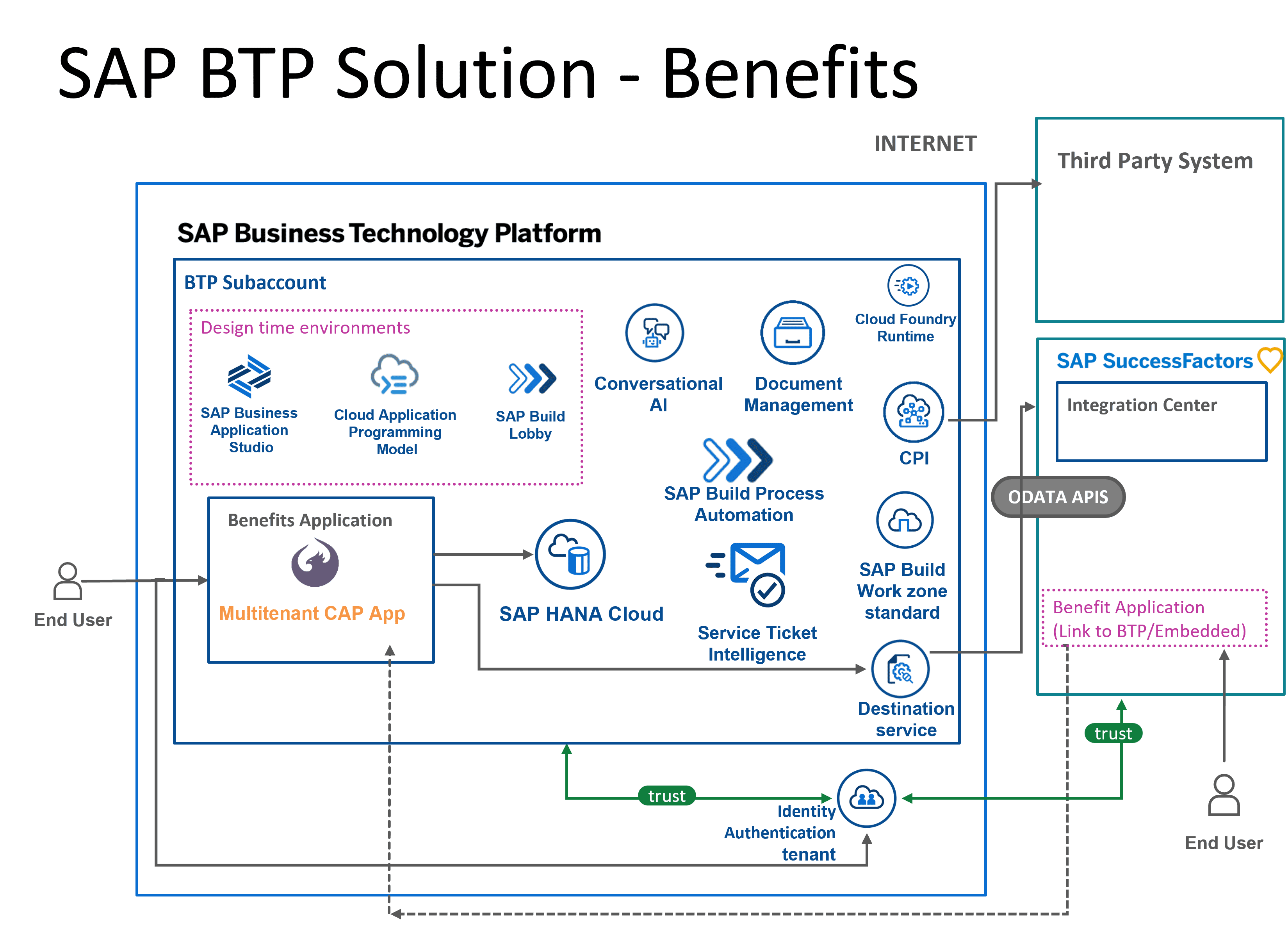
Side-by-side extensions are software applications that run externally to the core application, i.e., Benefits Reimagined and interact with it using standard APIs.

Side-by-side extensions provide the freedom to customize and do not face the limitations of in-app extensions.

They can run on any runtime application platform, but Benefits Reimagined offers and recommends its dedicated platform: the Benefits Reimagined Business Technology Platform.

Side-by-side extensions can be coded using any programming language, including Java, JavaScript, Node JS, React JS, and more.

The software architecture of a side-by-side extension

A side-by-side extension is a customer or Partner developed and operated application that runs alongside Benefits Reimagined.

Depending on the requirements, the extension application can be integrated with the Benefits Reimagined application at various levels, such as the UI, application logic, or data level.

Some key features of side-by-side extensions are:

  • They are decoupled from the core application, with integration occurring through APIs, events, and replication services.
  • The lifecycle of the extension application is independent of the Benefits Reimagined application.
  • The two applications run on separate application stacks.
  • Hybrid scenarios are supported.
Picture1 70 Why Flexibility, Configurability & Extensibility matter for Benefits Administration?
B UI5 V noBG Why Flexibility, Configurability & Extensibility matter for Benefits Administration?

APIs- It is Essential for Employee Benefits Applications

Benefits Reimagined provides a set of APIs that allow side-by-side extension applications to interact with the Benefits Reimagined core. These APIs enable technical consultants to read Benefits Reimagined application data and programmatically perform various actions, such as retrieving a list of benefits or creating new benefit plans.

The APIs provided by Benefits Reimagined are designed to be stable throughout their lifecycle. Unless significant changes occur in the backend application, the APIs will continue functioning similarly even after upgrading the Benefits Reimagined application to the next release.

The APIs are based on open protocols, such as OData, REST, and SOAP, making them accessible to any external program that adheres to these standards.

APIs are vital in maximizing the Benefits Reimagined applications’ efficiency, effectiveness, and user satisfaction. They are mainly very useful in the following areas:

Integration: APIs allow Employee Benefits applications to seamlessly integrate with HR systems, streamlining processes and ensuring accurate data exchange.

Enhanced Employee Experience: APIs enable integrating benefits applications with employee-facing tools, providing a unified and convenient user experience.

Data Synchronization: APIs ensure employee data stays synchronized between different systems, eliminating discrepancies and reducing manual data entry.

Third-Party Integrations: APIs enable benefits applications to integrate with external service providers, offering employees a comprehensive range of services.

Reporting and Analytics: APIs provide access to benefits data, allowing for comprehensive analysis and informed decision-making.

Flexibility and Customization: APIs empower organizations to customize and extend the functionality of benefits applications according to their specific needs.

A few highlights of the Benefits Reimagined extensions.      

Overall Eligibility: In the case of employee Benefits Eligibility, Benefits Reimagined has a lot of business rules which should be sufficient for 95% of the customers, but for that 05% of customers, you can have an extension for any additional logic.

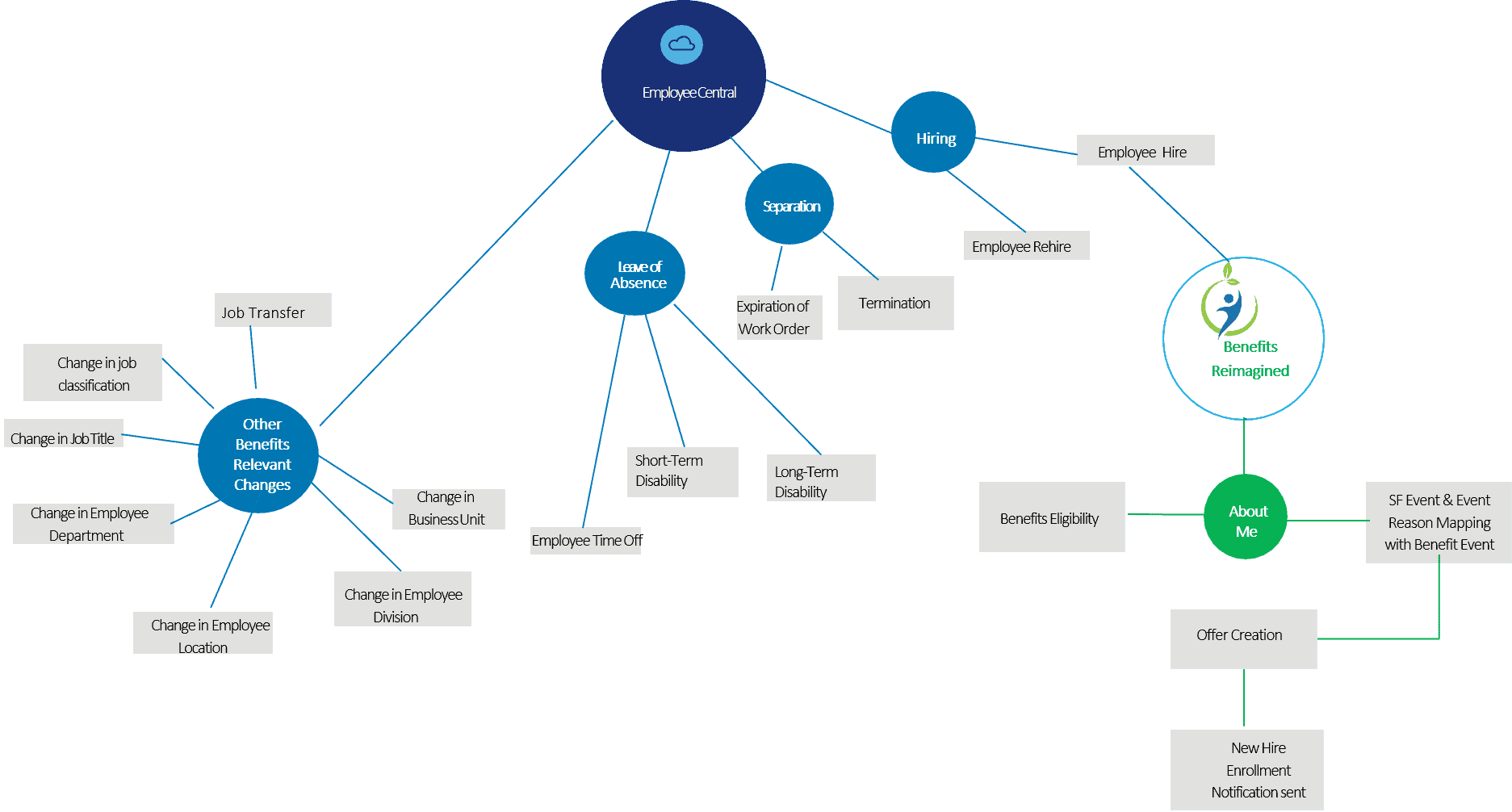
Macro and Micro Eligibility: Benefits Reimagined offers both Macro and Micro eligibility to fine-tune the precise Benefits plans that the employee will be eligible for various Enrollment offers like New Hire, Re-Hire, Termination, Benefit Life events, etc.

Grouping various employees into Cost, Credit, Termination, eligibility, etc.: Benefits Reimagined does offer plenty of business rules for all customers out of the box; however, for those customers who would need a bit of extra, we have extensions offered in each of those areas.

Calculating cost, credit, benefits salary, coverage amount, eligibility date, termination date, plan participation date, etc.: Like the above, Benefits Reimagined does offer plenty of business rules for all customers out of the box; however, for those customers who would need a bit of extra we have extensions offered in each of these areas.

Benefits Life Event: Sometimes, you need different employee rules or groupings in any “Benefit Life or Organization Event.” On top of Business Rule, this extension allows you to write your custom logic here for some or all employees.

Calculations for Cutoff dates for age, length of service, seniority salary, and more: Like the above-mentioned extensions, these extensions allow the added advantage of including your own logic for these processes.

Carryover to HSA-Compatible Health FSA: In the first scenario, you have an employee with a general-purpose Health Flexible Spending Arrangement (health FSA) that allows for the carryover of unused amounts. However, the employee declines or waives the unused amounts for the following year.

In the second scenario, you have an employee who participates in a general-purpose health FSA but intends to switch to a Health Savings Account (HSA)-compatible health FSA for the following year. This employee decides to carry over any unused amounts from the general-purpose health FSA to the HSA-compatible health FSA for the following year.

In both cases, this extension allows you to determine how the system calculates the reimbursement amount, the account balance, and the carryover amounts for FSA claims.