Table of Contents
RECENT POSTS
-
 26 October 2025Top-Rated HRIS Systems in 2025: A Comparison of the Best HR Software
 -
 26 October 2025The Most Common HRIS Systems Used by Growing Companies in 2025
 -
 26 October 2025What Is an HRIS System? How It Transforms Modern HR Management
 -
 16 October 2025Why Your Benefits Platform Needs a CRM Mindset — And How Benefits...
The right HRIS system (Human Resource Information System) can make or break your HR team’s efficiency.
From payroll and benefits to talent analytics, your HRIS serves as the nerve center of your workforce data.
But here’s the challenge — not all HRIS systems are built the same.
Some focus on compliance and data storage, while others drive automation, analytics, and employee experience.
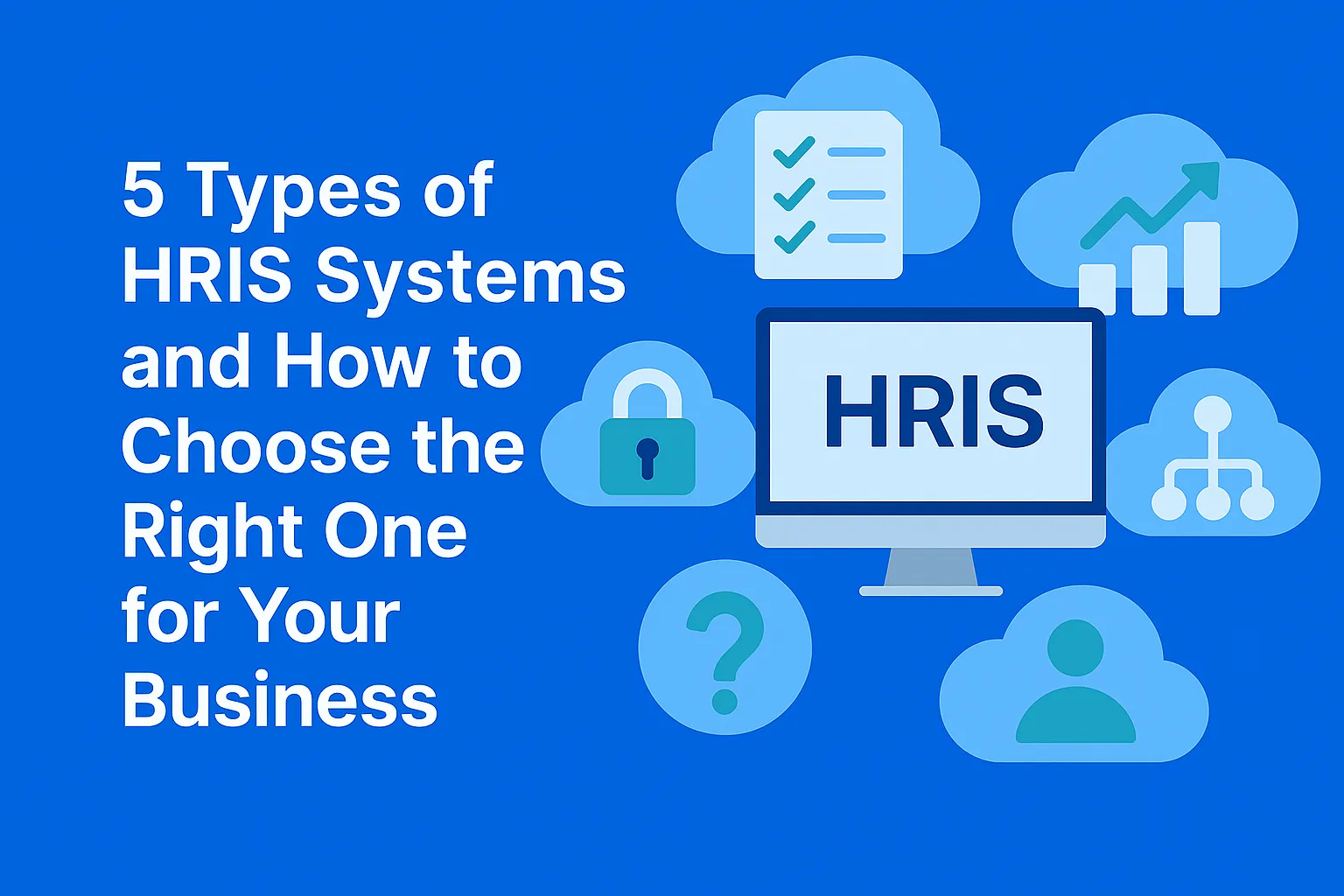
In this blog, we’ll explore the 5 main types of HRIS systems, what each does best, and how to choose the right one for your business — especially if you’re scaling your HR operations or modernizing benefits management.
The 5 Main Types of HRIS Systems
1. Operational HRIS: Streamlining Core HR Processes
An Operational HRIS focuses on day-to-day HR functions — think employee records, job history, and benefits enrollment.
It’s often the first HRIS that growing organizations adopt.
Key Functions:
- Employee database management
- Payroll integration
- Attendance and leave tracking
- Basic reporting
Best For:
Small to medium-sized businesses looking for a foundational HR platform that manages core HR data.
Example Use Case:
A 100-person company uses an operational HRIS to track employee profiles, automate pay cycles, and ensure benefit eligibility accuracy.
🔗 If you’re managing employee benefits manually, check out Benefits Reimagined’s automation solutions to integrate seamlessly with your HRIS.
2. Tactical HRIS: Supporting Talent Management
A Tactical HRIS goes beyond record-keeping to help manage recruiting, training, and performance reviews.
It supports HR managers in aligning talent strategy with organizational goals.
Key Functions:
- Recruitment and applicant tracking (ATS)
- Performance management and feedback cycles
- Learning and development modules
Best For:
Organizations focused on building talent pipelines and improving workforce capabilities.
💡 Pro Tip: Integrate your tactical HRIS with Benefits Reimagined to automatically sync employee benefit eligibility during promotions or transfers.
3. Strategic HRIS: Data-Driven Decision Making
A Strategic HRIS empowers leadership with analytics and forecasting tools for long-term workforce planning.
Key Functions:
- Workforce analytics and predictive modeling
- Succession planning
- Strategic workforce budgeting
Best For:
Large enterprises or data-driven HR teams looking to use HR insights to guide leadership decisions.
Example:
A multinational company uses a strategic HRIS to identify skill gaps, forecast future hiring needs, and optimize compensation planning.
📊 Combine your strategic HRIS with Benefits Reimagined’s analytics dashboard to track engagement and ROI across benefits programs.
4. Comprehensive HRIS: All-in-One HR Suite
A Comprehensive HRIS merges all HR functions — operations, talent, benefits, compliance, and analytics — into a single ecosystem.
Key Functions:
- Payroll and compliance
- Talent acquisition and performance
- Benefits administration and open enrollment
- Analytics and reporting
Best For:
Mid-to-large organizations wanting one integrated platform that scales as their HR needs grow.
Example:
SAP SuccessFactors or Workday, especially when paired with Benefits Reimagined, can serve as a powerful enterprise-grade HR ecosystem.
5. Cloud-Based / SaaS HRIS: Flexibility and Scalability
Modern HRIS systems are increasingly cloud-based, meaning they can be accessed anytime, anywhere.
They require less IT maintenance and scale easily as your organization grows.
Key Functions:
- Web or mobile access for employees and HR teams
- Real-time updates and security compliance
- API integrations with third-party systems (e.g., benefits, payroll, or ERP)
Best For:
Growing and global teams that need remote access, easy integrations, and continuous innovation.
🌐 Benefits Reimagined integrates effortlessly with leading SaaS HRIS platforms — ensuring your HR and benefits data stay connected, clean, and compliant.
How to Choose the Right HRIS System for Your Business
With so many types available, selecting the right HRIS system comes down to your company’s size, goals, and digital maturity.
Here’s a quick framework to guide your choice:
Key Factors When Choosing an HRIS System
| Factor | What to Consider | Why It Matters |
|---|---|---|
| Company Size | SMBs may start with operational or tactical HRIS; enterprises benefit from strategic or comprehensive HRIS | Avoid overpaying for unused features |
| Integration Needs | Does it connect with your benefits, payroll, and analytics tools? | Prevents data silos and duplicate entry |
| Scalability | Can it grow with your workforce? | Future-proofs your HR tech investment |
| User Experience | Is it intuitive for HR staff and employees? | Drives adoption and reduces training time |
| Compliance | Does it meet regional data and labor regulations? | Protects your business from legal risks |
Making HRIS + Benefits Work Seamlessly
Most HR leaders underestimate how much benefits administration depends on HRIS accuracy.
If your employee data isn’t clean or synced, benefits enrollment errors, compliance issues, and reporting delays can occur.
Integrating your HRIS with Benefits Reimagined’s intelligent platform ensures:
✅ Automated benefits enrollment
✅ Compliance across ACA, COBRA, FSA, and HSA programs
✅ Real-time analytics for workforce insights
💬 Learn how Benefits Reimagined helps HR teams unify HRIS and benefits management into one intelligent ecosystem.
Conclusion: Build an HR Tech Stack That Works for You
Choosing the right HRIS system isn’t about following trends — it’s about finding the system that fits your people, processes, and long-term strategy.
Whether you start with an operational HRIS or move toward a comprehensive, cloud-based platform, integrating it with Benefits Reimagined gives you a future-proof, connected HR experience that delivers measurable ROI.
Ready to Integrate Your HRIS with Smarter Benefits Tools?
Discover how Benefits Reimagined helps HR leaders automate benefits, enhance data accuracy, and unlock workforce insights — all from one unified platform.
👉 Schedule a Demo Today and see how your HRIS can become a strategic advantage.