Table of Contents
- Artificial Intelligence (AI) and Employee Benefits: Intelligent Decision-Making for Benefits Administration
- Machine Learning (ML): Predictive Analytics for Better Benefit Planning
- Deep Learning (DL): Understanding Complex Patterns in Benefits Data
- Generative AI (GenAI): Creating Personalized Engagement at Scale
- Conclusion: The Future of Employee Benefits is AI-First
RECENT POSTS
-
 26 October 2025Top-Rated HRIS Systems in 2025: A Comparison of the Best HR Software
 -
 26 October 2025The Most Common HRIS Systems Used by Growing Companies in 2025
 -
 26 October 20255 Types of HRIS Systems and How to Choose the Right One...
 -
 26 October 2025What Is an HRIS System? How It Transforms Modern HR Management
In today’s rapidly evolving digital landscape, Artificial Intelligence (AI) and its associated technologies — Machine Learning (ML), Deep Learning (DL), and Generative AI (GenAI) — are no longer futuristic concepts. They are actively transforming industries across the board, including the way we manage and deliver employee benefits.
But what do AI in employee benefit actually mean? And more importantly, what are employee benefits, how do they work, and why are they important in the first place? Even more, how can AI, ML, DL, and GenAI be applied practically within the world of benefits to improve administration, reduce costs, personalize experiences, and increase employee satisfaction?
Let’s dive in — exploring both the technology and its real-world applications on AI in employee benefits management.
Artificial Intelligence (AI) and Employee Benefits: Intelligent Decision-Making for Benefits Administration
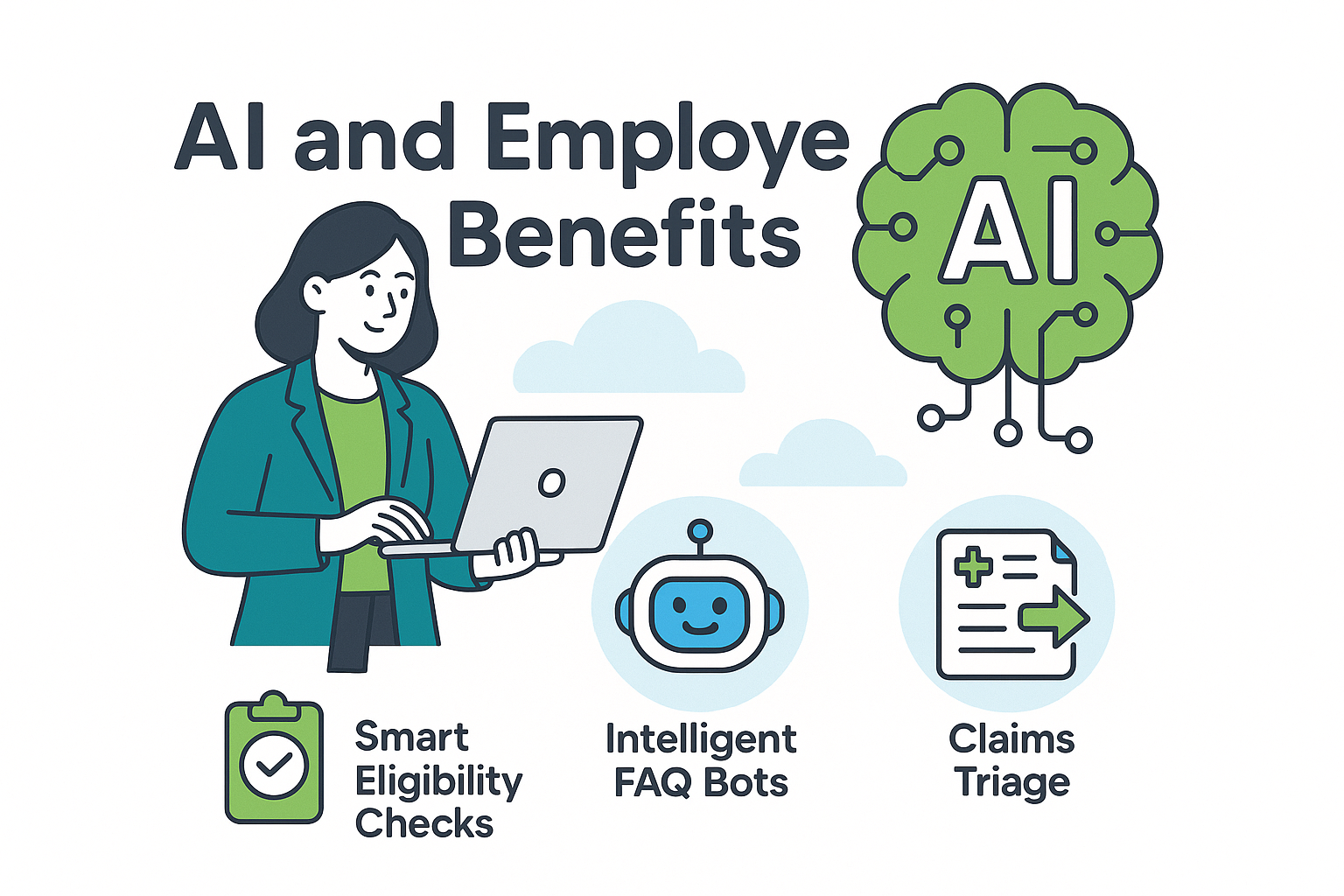
At its core, artificial intelligence (AI) refers to machines performing tasks that typically require human intelligence — learning, inferring, and reasoning.
In the context of employee benefits, AI can bring automation, accuracy, and smarter decision-making across the entire lifecycle of benefits delivery.
How do Employee Benefits Work with AI:
Smart Eligibility Checks
AI can automatically validate if an employee meets eligibility rules for different benefits based on hire date, work hours, location, and dependent status. This reduces manual errors and speeds up onboarding and mid-year enrollment events.
Intelligent FAQ Bots
AI chatbots integrated into benefits portals can handle thousands of routine queries like “When does my health insurance start?” or “Can I add my spouse after marriage?” This reduces HR service center workload while providing 24/7 support to employees.
Claims Triage
AI can help triage and route incoming benefit claims (health, dental, FSA) to the right processing queue, based on complexity, ensuring faster claim approvals.
Example:
A mid-size technology company used AI-based automation offered by Benefits Reimagined to cut down their new hire benefits enrollment verification time from 5 days to 12 hours, increasing employee satisfaction and lowering administrative costs.
Machine Learning (ML): Predictive Analytics for Better Benefit Planning
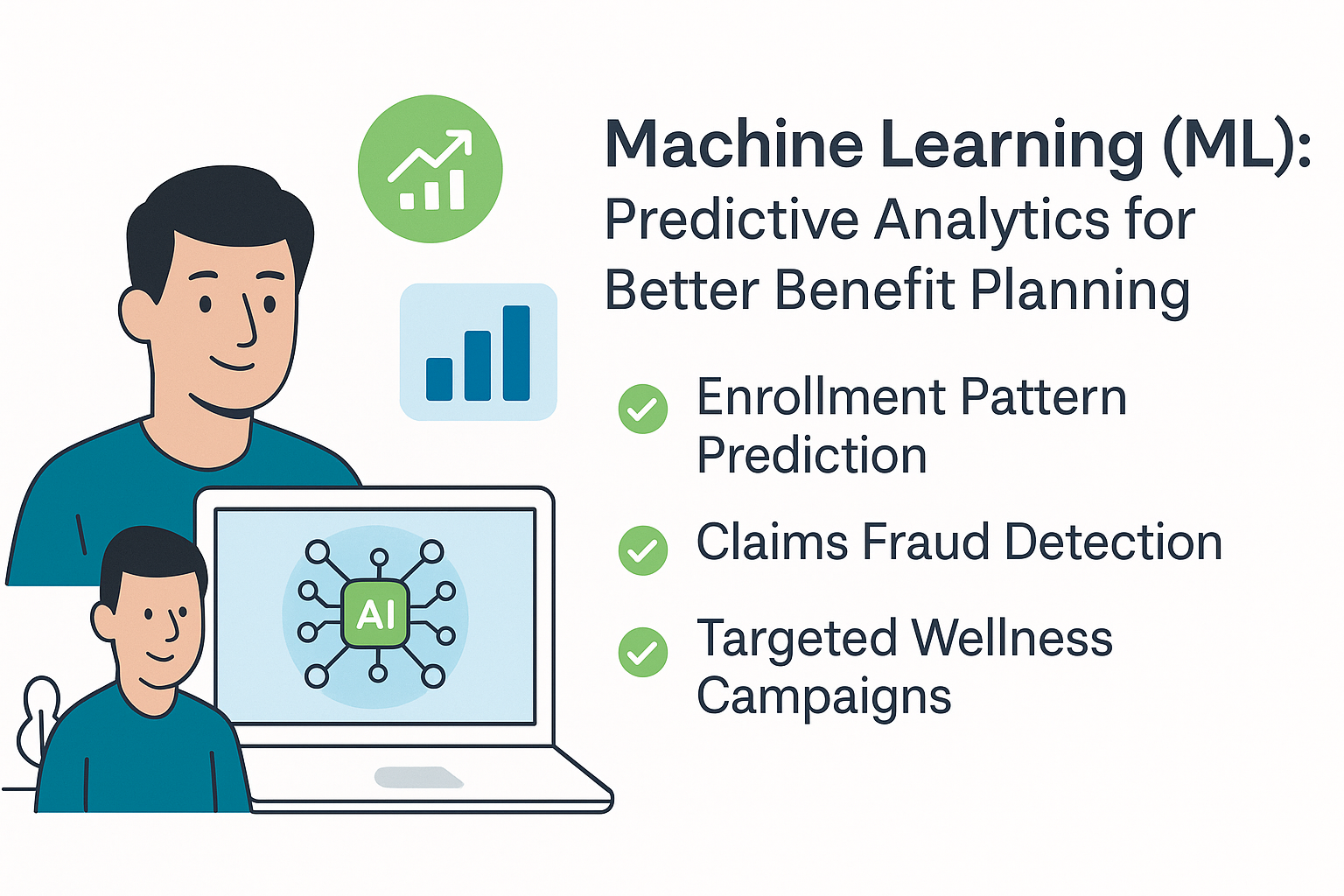
Machine learning is a branch of AI where systems learn from past data and improve over time — without being explicitly programmed for every situation.
ML is particularly powerful in ai and employee benefits when it comes to prediction, pattern recognition, and personalization.
How do Employee Benefits Work with ML:
Enrollment Pattern Prediction
Machine learning models can forecast how many employees are likely to choose high-deductible health plans (HDHPs) versus PPO plans based on age, salary band, family size, or health risk profile.
Claims Fraud Detection
ML can detect anomalies in medical or disability claims, flagging unusual patterns for human review — saving millions in potential overpayments.
Targeted Wellness Campaigns
ML can analyze employee demographics and claims history to suggest wellness programs (e.g., smoking cessation, mental health support) that have the highest probability of participation and success.
Example:
A national healthcare company used ML models to predict open enrollment plan selections and saw a 22% increase in targeted communication engagement, leading to better plan elections aligned with employee needs.
Deep Learning (DL): Understanding Complex Patterns in Benefits Data
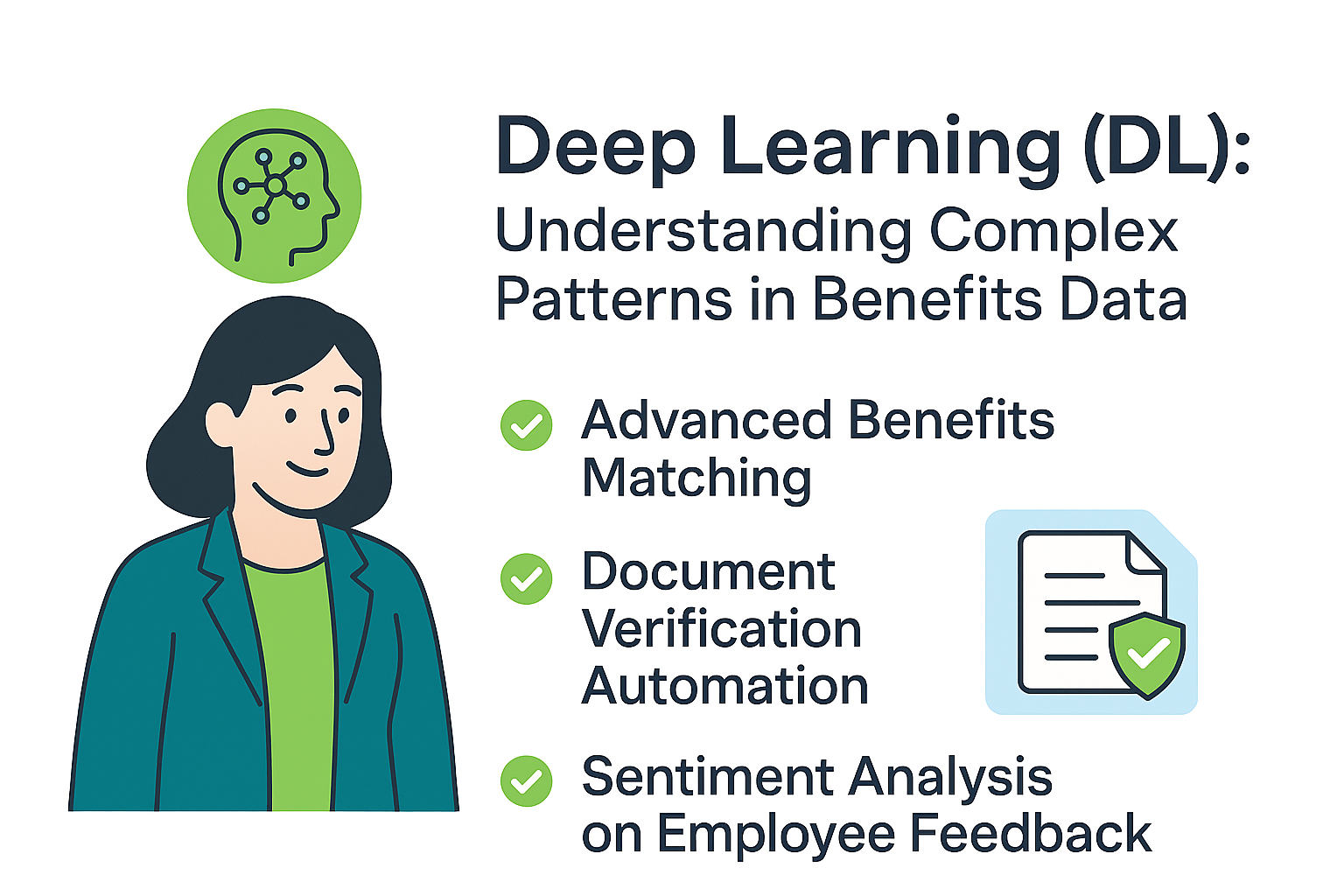
Deep learning — a specialized form of machine learning — uses multilayered neural networks to simulate how the human brain processes information. It excels at handling complex, high-dimensional data.
In the benefits world, deep learning unlocks highly advanced personalization, automation, and verification.
How do Employee Benefits Work with DL:
Advanced Benefits Matching
Deep learning can analyze employee health history (via anonymized, consented data) to recommend plans that optimize both costs and expected healthcare usage.
Document Verification Automation
For dependent verification during open enrollment (e.g., spouse birth certificates, marriage certificates), deep learning models can scan, read, and validate documents at high speed, flagging missing or fraudulent submissions.
Sentiment Analysis on Employee Feedback
DL models can process feedback surveys and employee comments to detect emotional tone (satisfaction, confusion, frustration) about benefits programs — allowing HR teams to adjust communication strategies.
Example:
A Fortune 500 retailer deployed deep learning-based document verification and reduced their dependent verification audit costs by 40%, while improving audit accuracy.
Generative AI (GenAI): Creating Personalized Engagement at Scale
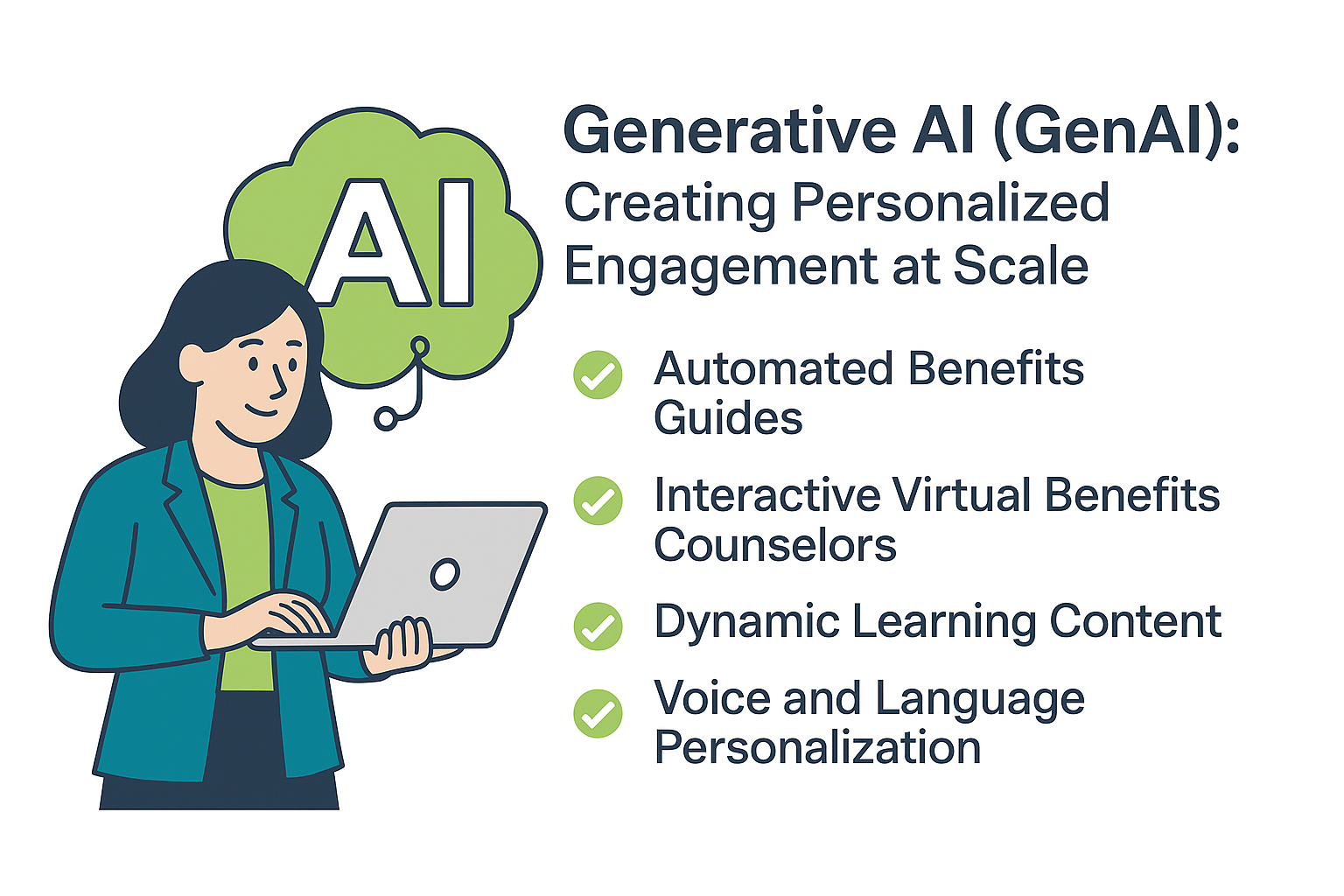
Generative AI is the newest and most disruptive evolution in this family of technologies. GenAI doesn’t just recognize patterns — it can create new content, from writing documents to generating videos or realistic conversations.
In employee benefits, Generative AI opens exciting new possibilities for employee engagement, content creation, and dynamic support.
How do Employee Benefits Work with GenAI:
Automated Benefits Guides
GenAI tools can generate customized open enrollment guides based on employee profile — location, eligibility, previous elections — making communications highly relevant.
Interactive Virtual Benefits Counselors
Instead of static PDFs, employees interact with GenAI-powered virtual assistants that guide them through plan options, cost projections, and FAQs conversationally, making enrollment more intuitive and less stressful.
Dynamic Learning Content
Create bite-sized learning videos, explainer documents, or personalized FAQs based on user search behaviors — all generated on the fly to reduce HR workload.
Voice and Language Personalization
GenAI can auto-translate benefits materials into an employee’s preferred language, or even create audio versions of documents for accessibility.
Example:
A financial services firm used Generative AI to create individualized benefits decision support videos for 12,000 employees during open enrollment, resulting in a 38% higher plan selection satisfaction score.
Conclusion: The Future of Employee Benefits is AI-First
The evolution from traditional AI to machine learning, deep learning, and now generative AI is not just a technical journey — it’s a business transformation.
✅ AI powers smart decision-making and automates basic processes.
✅ Machine Learning brings predictive insights and fraud detection to benefits administration.
✅ Deep Learning understands complex employee needs and drives hyper-personalization.
✅ Generative AI revolutionizes employee engagement, making benefits education dynamic, personal, and accessible.
So, why are employee benefits important today? Because with AI and advanced technologies, they are no longer just perks — they are strategic tools for improving employee satisfaction, retention, and overall well-being.
As AI continues to evolve, organizations that invest early in these innovations will build more resilient, inclusive, and employee-centered benefits ecosystems.
The future is AI-powered — and in employee benefits, the future is already here.
Ready to reimagine benefits with AI, ML, DL, and GenAI?