Table of Contents
RECENT POSTS
-
 26 October 2025Top-Rated HRIS Systems in 2025: A Comparison of the Best HR Software
 -
 26 October 2025The Most Common HRIS Systems Used by Growing Companies in 2025
 -
 26 October 20255 Types of HRIS Systems and How to Choose the Right One...
 -
 26 October 2025What Is an HRIS System? How It Transforms Modern HR Management
In today’s competitive job market, employee benefits packages have become crucial differentiators for attracting and retaining talent. Recent surveys from leading organizations like SHRM, People Keep, and Mercer provide valuable insights into the current benefits landscape and is a part of the 2024 employee benefits trend. Let’s examine what employers are offering and what employees truly value.
Healthcare Benefits: Still the Foundation
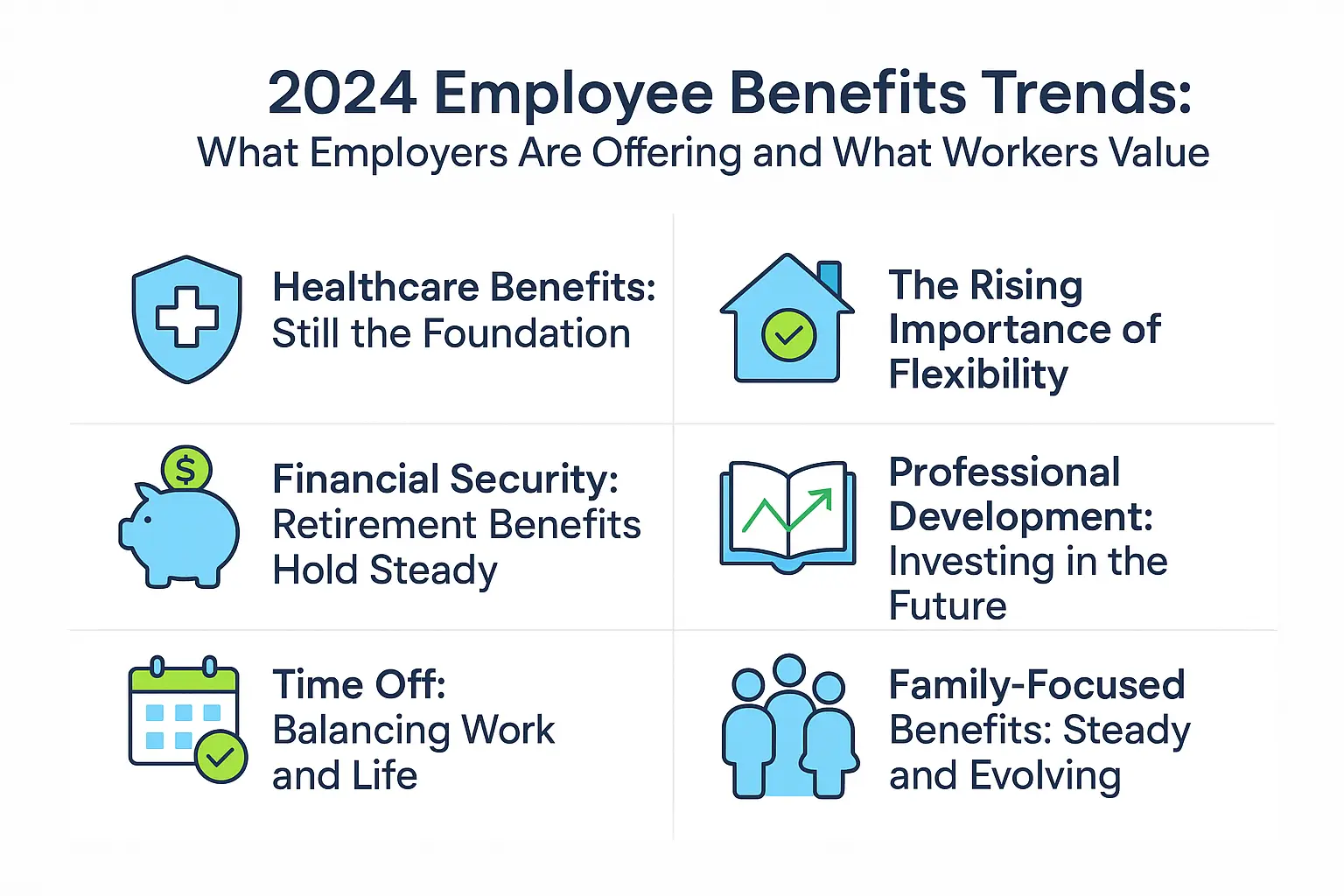
Healthcare benefits continue to serve as the cornerstone of employee benefits packages. According to the SHRM 2024 Employee Benefits Survey, an overwhelming 97% of employers offer some form of health plan coverage. This high adoption rate reflects the critical importance placed on healthcare, with 88% of employers rating these benefits as “very important” or “extremely important” for their workforce.
From the employee perspective, health benefits show a strong 76% participation rate, confirming their position as one of the most utilized benefits.
Financial Security: Retirement Benefits Hold Steady
Retirement benefits maintain their position as another highly valued benefit category, with approximately 80% of employers offering some form of retirement plan. Employee participation matches healthcare at 76%, demonstrating that workers place equal importance on current healthcare coverage and future financial security.
Time Off: Balancing Work and Life
Paid time off continues to be a cornerstone benefit with about 90% of employers offering it and 75% of employees actively using it. According to SHRM, employers typically provide:
- 12 paid vacation days
- 10 paid sick days
- 20 PTO days for full-time employees with one year of service
The Rising Importance of Flexibility
The pandemic-accelerated shift to remote and hybrid work arrangements has solidified flexible work as a key benefit. Now, 70% of employers recognize the importance of offering flexible work options. This reflects a fundamental change in how organizations approach work-life balance and employee autonomy.
Professional Development: Investing in the Future
With rapid technological changes and the growing influence of AI, professional development benefits are gaining significant traction. Currently, 65% of employers rate professional development as “very important” or “extremely important” to their benefits strategy, recognizing the need for continuous upskilling and reskilling in today’s dynamic work environment.
Family-Focused Benefits: Steady and Evolving
Paid parental leave remains available at 40% of organizations, maintaining gains made in previous years. Meanwhile, new family-focused benefits are emerging, with menopause-related support representing an area of growing focus as employers seek to address more diverse employee needs across different life stages.
The Benefits Gap
Despite extensive offerings, there’s still room for improvement. Only 47% of employees feel their benefits packages align with their specific needs, and nearly two-thirds identify gaps in their current benefits. This disconnect highlights the importance of employers regularly reassessing their benefits strategies.
Looking Ahead: More Benefits on the Horizon
The future looks promising for employee benefits, with 89% of employers planning to enhance or add more benefits in 2025. However, cost remains the primary challenge, with 56% of employers citing it as their biggest hurdle when implementing new benefits programs.
What This Means for Organizations
The data clearly shows that comprehensive benefits packages remain essential for successful recruitment and retention strategies. With 81% of employees indicating that an employer’s benefits package is a key factor in accepting a job offer, organizations must continue to evolve their offerings to meet changing workforce expectations.
While traditional benefits like healthcare and retirement plans remain foundational, employers should also focus on emerging areas like flexible work arrangements, comprehensive professional development, and inclusive family benefits to create truly competitive packages that meet the diverse needs of today’s workforce.
As we move into 2024, organizations that successfully balance traditional offerings with innovative benefits addressing evolving employee needs will likely gain a significant advantage in the ongoing competition for talent.
How Benefits Reimagined Can Help
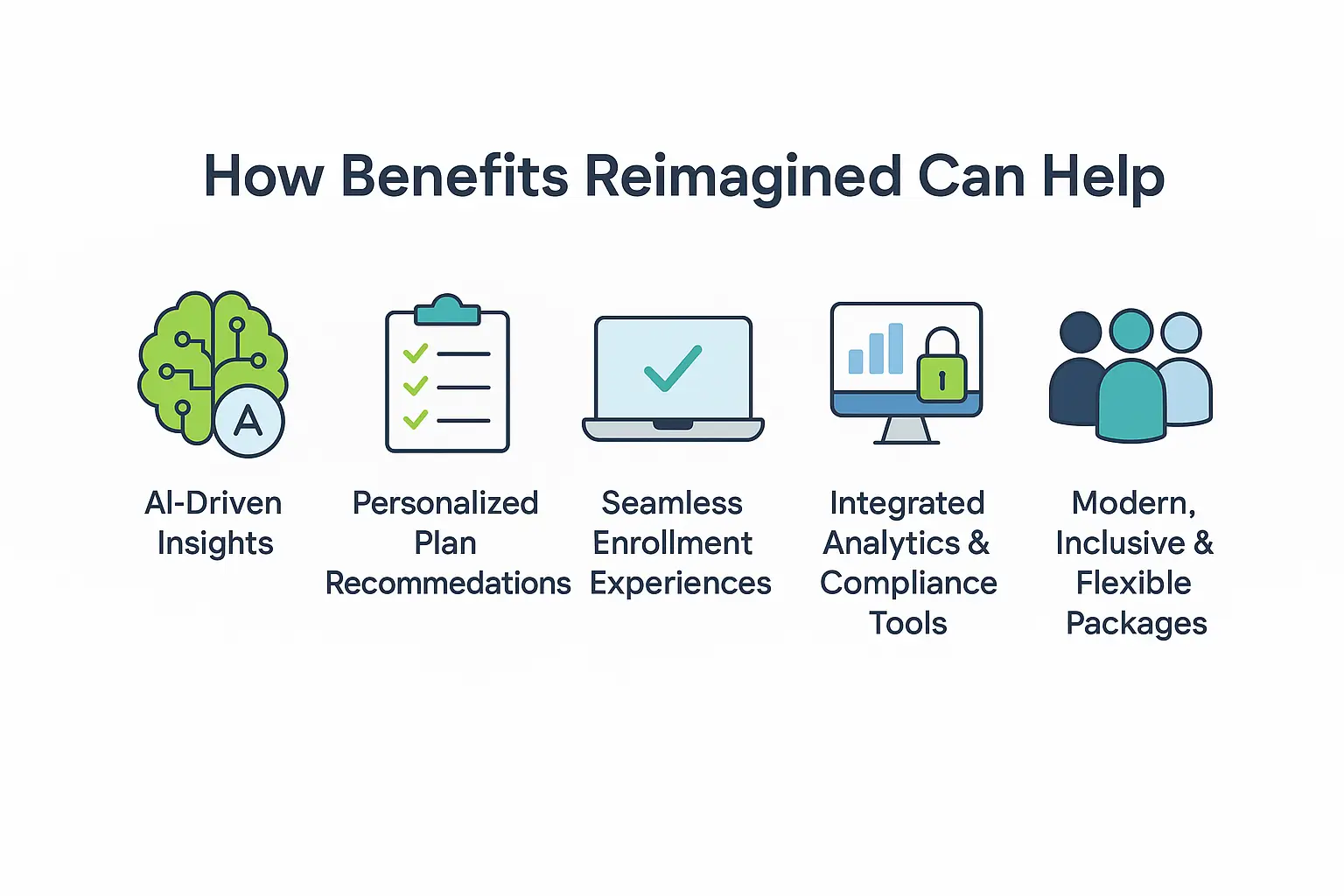
At Benefits Reimagined, we understand that designing modern, inclusive, and flexible benefits packages isn’t just about checking boxes—it’s about meeting your workforce where they are. Our platform empowers HR teams with AI-driven insights, personalized plan recommendations, and seamless enrollment experiences that align with the evolving expectations of today’s employees.
Whether you’re looking to enhance core offerings, bridge the benefits gap, or streamline administration with integrated analytics and compliance tools, Benefits Reimagined provides the innovation and intelligence you need to stay ahead in 2024 and beyond.
Let us help you build benefits that work for everyone—because when employees feel valued, everyone wins.